
Pool Leak Detection Services in Warren & Bernardsville, NJ
A pool that loses water faster than normal evaporation can account for is almost always leaking somewhere — and finding exactly where that leak is located requires more than a visual inspection. Pool leaks can originate from the shell itself, from plumbing lines running beneath the deck or through the ground, from fittings and returns, or from equipment connections at the pad. Left unresolved, even a slow leak causes significant water loss, increases chemical costs, undermines the soil beneath and around your pool, and can lead to structural damage that becomes far more expensive to fix than the original leak. Unlimited Pools LLC provides professional pool leak detection services in Warren and Bernardsville, NJ, using proven methods to locate the source of water loss accurately so repairs can be made in the right place the first time.
Call
Unlimited Pools LLC
now to schedule pool leak detection in Warren or Bernardsville, NJ before the problem gets worse.
•POOL LEAK DETECTION
How to Tell If Your Pool Has a Leak
Water loss in a pool is not always immediately obvious, and many homeowners assume normal evaporation is responsible before realizing the loss is greater than it should be. In New Jersey's summer climate, evaporation typically accounts for around a quarter to half an inch of water loss per day depending on heat, wind, and humidity. Losses beyond that range, particularly when they occur consistently over multiple days, point to a leak rather than evaporation.
The Bucket Test
One of the most reliable ways to distinguish evaporation from a leak is the bucket test. A bucket filled with pool water is placed on a pool step and left for 24 to 48 hours with the pump running normally. If the pool loses noticeably more water than the bucket does over the same period and under the same conditions, a leak is present. This test removes weather variables from the equation and gives a clear baseline for comparison.
Signs Beyond Water Loss
Unusual water loss is the most obvious indicator, but other signs also point to leaks. Cracks or separation in the pool shell or coping, soft or sunken areas in the surrounding soil or deck, unexplained increases in water bills, constantly needing to add water to maintain level, and wet spots in the yard near pool plumbing lines are all signs that warrant professional leak detection.
Contact
Unlimited Pools LLC
if you suspect your pool is leaking in Warren or Bernardsville, NJ — schedule your leak detection inspection today.
Professional Pool Leak Detection Methods
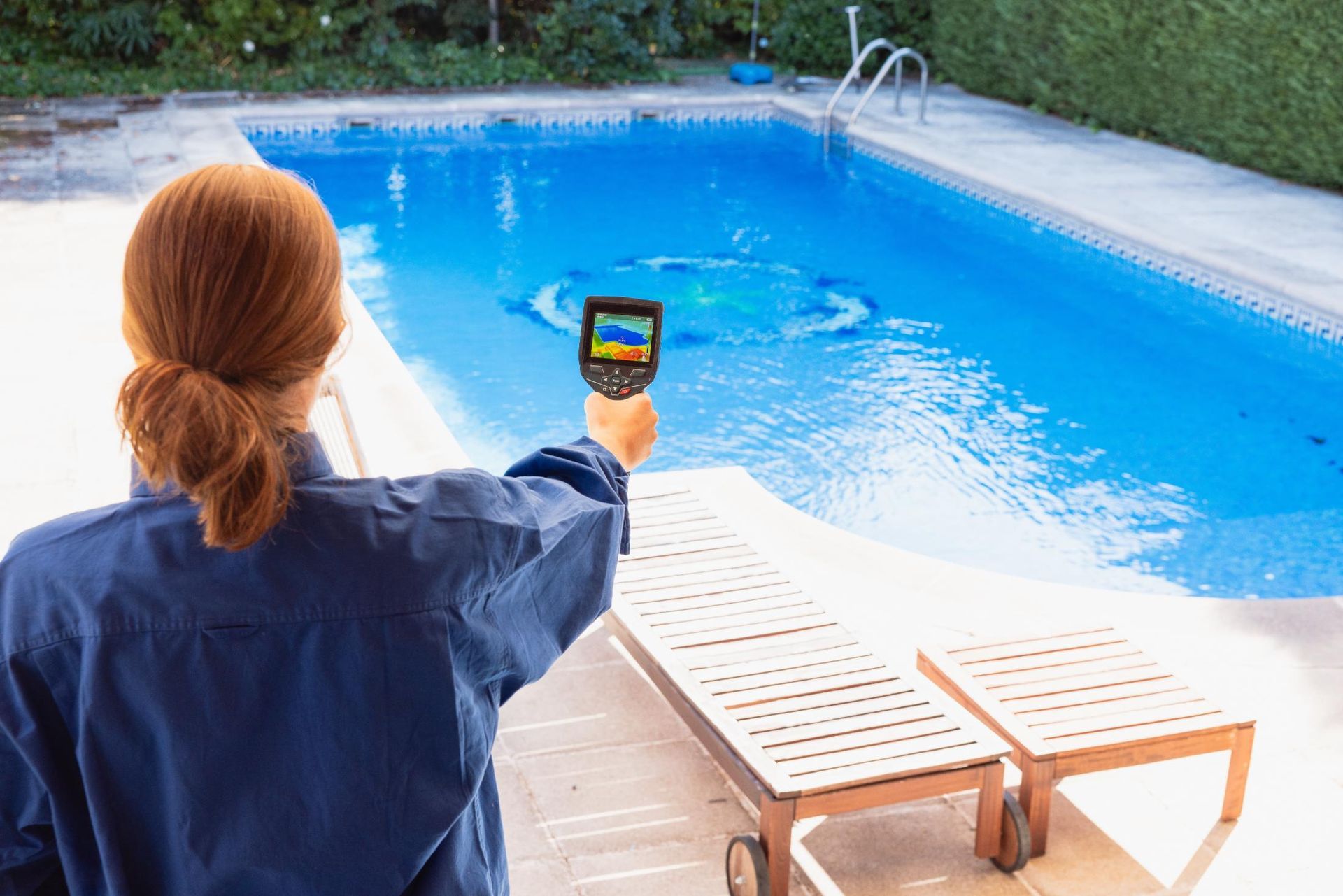
Accurately locating a pool leak requires systematic diagnostic methods rather than assumptions about where the water is going. Unlimited Pools LLC
uses professional leak detection techniques to isolate the source of water loss whether it originates in the structure, the plumbing, or the equipment.
Pressure Testing Pool Plumbing
Pressure testing involves isolating individual plumbing lines and pressurizing them to identify whether a specific line is holding pressure or losing it. A line that cannot hold pressure has a leak somewhere along its run. This method allows each plumbing circuit to be evaluated independently, narrowing the location before any excavation or repair work begins.
Dye Testing
Dye testing is used to confirm suspected leak locations in the pool shell, around fittings, at returns and skimmers, and along the waterline. A small amount of dye is introduced near a suspected area while the water is kept as still as possible. If a leak is present, the dye is drawn toward it, visually confirming the exact point of water loss. This technique is highly effective for identifying cracks, gaps at fittings, and failing gaskets or seals.
Electronic Leak Detection
For leaks in underground plumbing lines that pressure testing has identified as problematic, electronic detection equipment can be used to pinpoint the leak location without requiring full excavation of the line. This significantly reduces the scope of repair work needed and avoids unnecessary disruption to decking, landscaping, or hardscape surrounding the pool.
Schedule professional pool leak detection with Unlimited Pools LLC
in Warren, NJ —
call now
to stop water loss at the source.
Common Sources of Pool Leaks
Pool leaks are not random — they tend to occur at predictable points of vulnerability in the pool system. Understanding where leaks most commonly develop helps explain why professional detection is necessary rather than a simple visual check.
Shell Cracks and Surface Failures
The pool shell — whether concrete, fiberglass, or vinyl — is subject to ground movement, freeze-thaw cycles, and normal aging. Hairline cracks in plaster or gunite, delamination of a fiberglass shell, and tears or separations in vinyl liner material all create pathways for water to escape into the surrounding soil.
Skimmer and Return Fittings
The connections where skimmers, returns, and light fixtures penetrate the pool wall are common leak points. The gaskets and fittings at these locations can deteriorate over time or pull away from the shell as the surrounding structure shifts slightly, creating gaps through which water escapes.
Underground Plumbing Lines
Plumbing lines that carry water between the pool and the equipment pad run beneath the deck and through the ground, making them invisible and difficult to assess without diagnostic equipment. Ground movement, root intrusion, and deteriorating pipe joints can all create leaks in these lines that are impossible to locate visually.
Equipment Pad Connections
Connections at the pump, filter, heater, and valve manifold are subject to pressure cycling every time the system runs. Worn seals, failing unions, and cracked fittings at the equipment pad are a frequent source of water loss that is often overlooked because the leak may not always be visible when the equipment is running at full pressure.
Call Unlimited Pools LLC to identify and confirm the source of your pool leak in Bernardsville, NJ — don't keep adding water to a problem that needs a solution.
Why Accurate Leak Detection Matters Before Repairs Begin
Attempting to repair a pool leak without first accurately locating its source is one of the most common and costly mistakes pool owners make. Patching a visible crack in the shell when the actual leak is in the plumbing results in continued water loss, additional expense, and unnecessary disruption. Professional leak detection establishes exactly where the water is going before any repair work begins, which means repairs are targeted, effective, and not repeated unnecessarily.
In Warren and Bernardsville, NJ, where pools sit on soil that is affected by seasonal freeze-thaw cycles and variable moisture levels, undetected leaks can undermine the structural integrity of pool surrounds, decking, and the pool shell itself over time. Water migrating through the soil beneath a concrete deck or gunite pool creates voids that cause settling and cracking well beyond the original leak point. Addressing leaks promptly and accurately protects the long-term structural condition of the entire pool installation.
Get accurate pool leak detection from Unlimited Pools LLC
in Warren & Bernardsville, NJ before water loss becomes structural damage —
contact us today.
Frequently Asked Questions About Pool Leak Detection in Warren & Bernardsville, NJ
How much water loss per day is normal for a pool in New Jersey?
Under typical summer conditions in New Jersey, evaporation accounts for roughly one quarter to one half inch of water loss per day. Pools with water features, higher wind exposure, or elevated temperatures may see slightly more. Consistent daily losses exceeding half an inch, particularly when the pool is covered overnight, are a strong indicator of a leak rather than normal evaporation.
How do I know if my pool is leaking or just evaporating?
The bucket test is the most reliable way to distinguish a leak from evaporation. Place a water-filled bucket on a pool step, mark the water levels in both the bucket and the pool, and check after 24 to 48 hours. If the pool level has dropped significantly more than the bucket level, a leak is present. If both dropped by a similar amount, the loss is likely evaporation.
Can a pool leak fix itself?
Pool leaks do not resolve on their own. In some rare cases, calcium deposits or debris can temporarily reduce flow through a small crack, but the underlying structural or plumbing failure remains. Leaving a leak unaddressed allows it to worsen over time and creates secondary problems including soil erosion, deck settling, and chemical imbalance from constantly adding fresh water.
How long does professional pool leak detection take?
A thorough pool leak detection inspection typically takes between two and four hours depending on pool size, the complexity of the plumbing system, and how many potential leak locations need to be evaluated. If the leak is straightforward and located quickly, the process can be shorter. More complex cases involving multiple potential sources may take longer.
Can a pool leak cause foundation or property damage?
Yes. Water escaping from a pool leak migrates through the surrounding soil, which can erode the base material beneath concrete decking, cause settling and cracking in hardscape, and in more severe cases affect the grade and drainage of the surrounding yard. Pools located near the home's foundation present additional risk if leaking water migrates in that direction. Prompt detection and repair limits this secondary damage significantly.
What is the most common cause of pool leaks?
The most frequently identified sources of pool leaks are skimmer and return fitting failures, cracks or separations in the pool shell or surface, and deteriorating gaskets at light fixtures and wall fittings. Underground plumbing leaks are also common but more difficult to locate without pressure testing equipment. The specific cause varies by pool age, construction type, and maintenance history.
Do pool leaks get worse over time?
Pool leaks almost always worsen over time rather than stabilizing. Water escaping through a crack or fitting gap softens and erodes surrounding material, which causes the gap to enlarge. Ground movement around a leaking plumbing line can shift the pipe further, worsening the break. Early detection and repair consistently results in simpler, less expensive fixes than repairs made after a leak has been allowed to progress.
Will a pool leak affect my water and chemical bills?
Yes. A leaking pool requires frequent water additions to maintain the operating level, which increases water usage costs directly. Each time fresh water is added, it dilutes the existing chemistry, requiring additional chemicals to rebalance. Over the course of a swim season, even a relatively slow leak can add up to significant expense in both water and chemical costs on top of the underlying repair cost.
Can I use leak detection dye myself to find a pool leak?
Dye testing kits are available for homeowner use and can help identify obvious leak points at accessible fittings and visible cracks. However, professional dye testing combined with pressure testing and electronic detection provides far more comprehensive and accurate results, particularly when the leak source is not obvious or is located in underground plumbing. DIY dye testing often identifies secondary leak points while missing the primary source.
How do I schedule pool leak detection in Warren or Bernardsville, NJ?
Contact Unlimited Pools LLC directly to arrange a leak detection visit. Having some information ready about how much water the pool is losing and whether you have noticed any visible cracks or wet areas around the pool will help the process go more efficiently. Scheduling early in the season means any leaks are identified and repaired before water loss and potential damage accumulate through the summer.


